

Everything you want to know about Psilocybin in one thoughtfully designed book.
You’re researching next steps on your psilocybin journey and may be feeling overwhelmed with choices in the sea of tripsitters, therapists, and retreats. You may be asking: how do I decide who my best choice is? How do I know if someone is a good tripsitter?
Having been in the mushroom space for almost eight years and as one of the founders of tripsitters.org, I’ve spent time with countless facilitators. I’ve been around great guides I would trust to hold space for my family, and others I wouldn’t recommend to anyone.
I’m lucky to have Leti, my partner, who is the best tripsitter I know. She’s tripsat for me about 150+ times, and has helped me integrate many challenging journeys. We’ve organized dozens of retreats together and have held space for all kinds of experiences. Leti helps me realize how lucky I am. I want everyone to have this type of loving care on their journeys.
I'm far from a perfect facilitator. I still go through situations that make me question my competency as a facilitator. I’ve made countless mistakes. Through these misjudgements, I’ve learned about what helps and what harms the journeyer. I'm happy to share some of these perspectivs with you today.
In this article, we’ll cover everything about tripsitters:
what a tripsitter does
• what qualities make someone good at it
• how to vet a guide or facilitator
• the questions worth asking before your journey
• what happens when things go sideways
• how much you should expect to pay for one
Whether you're preparing for your first psilocybin experience or your fifth, the question of who holds space for you is one of the most important decisions in your process.
A tripsitter is someone who remains present during your psilocybin journey to ensure your psychological and physical well-being. The role shifts throughout the experience in ways that are hard to anticipate until you're in the middle of it.
At different points in the journey, your sitter might resemble a babysitter, a nurse, a sweet friend, or a quiet parental figure. Their job is to stay non-judgmental and fully present.
They're not there to direct your experience, interpret your visions, or nudge you toward a particular emotional destination. A good sitter follows your lead. They are patient. They don't push, rush, or force. They are grounded, and are not trying to get anything from you or the experience.
We can describe a sitter’s mindset as "non-doing." You and the medicine are doing the work. Their role is to hold space, keep the environment safe, be available when needed, and trust the process.
At times, they might sit quietly in the corner while you move through something internal. You may even forget they are there.
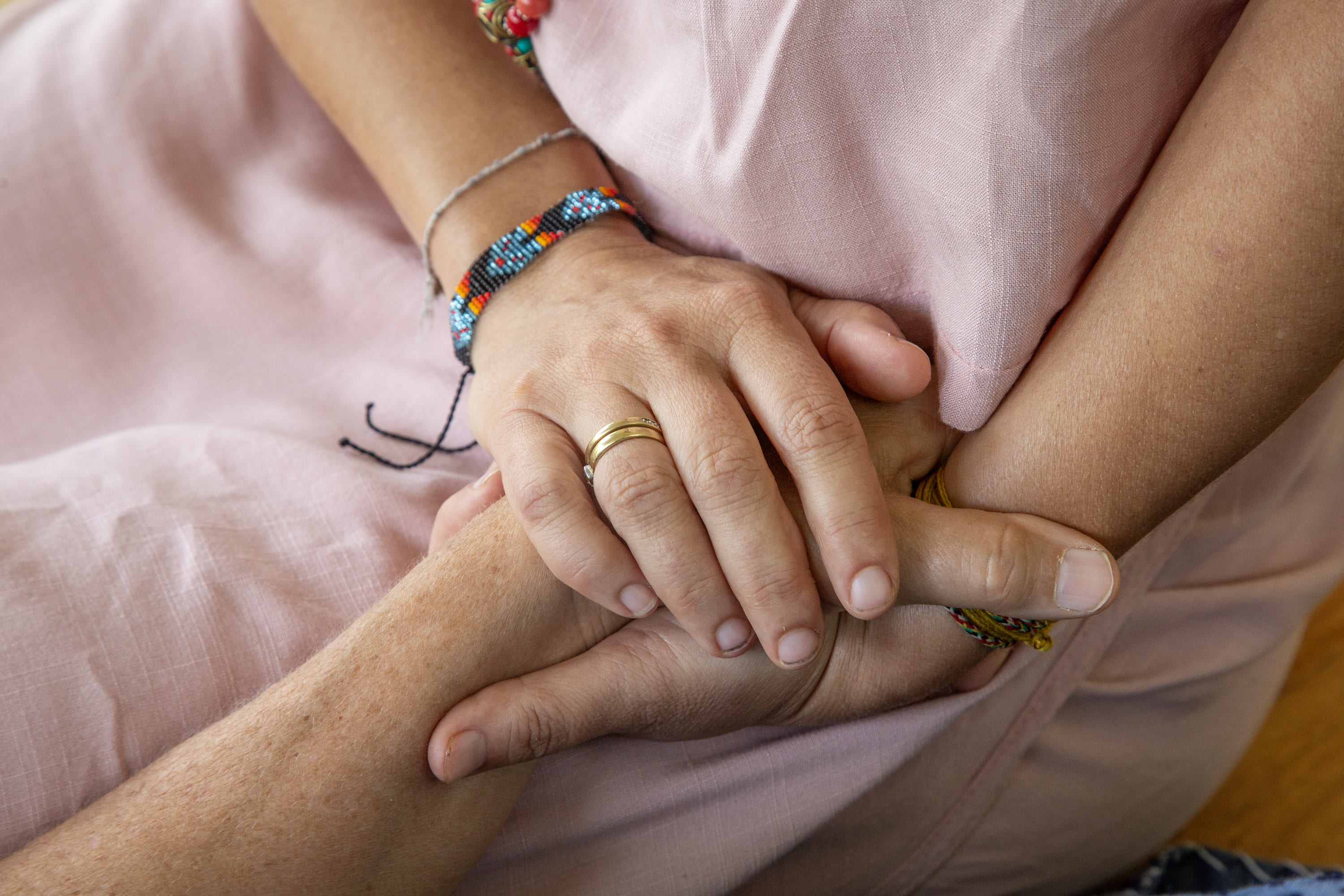
At other times, they might hold your hand, help you to the bathroom, adjust a blanket, offer water, or smile at the right moment. You might perceive them as a therapist, a teacher, an angel, or a gift. When Leti tripsits for me, there are moments when I see her as a precious jewel.
The best trip sitters help us feel safe. As psychologist Stephen W. Porges writes, “Basically, when humans feel safe, their nervous systems support the homeostatic functions of health, growth, and restoration, while they simultaneously become accessible to others without feeling or expressing threat and vulnerability.” We can open up, break down, and reveal our innermost thoughts and struggles without fear.
An effective guide helps you feel more confident and self-sufficient. They listen. They point you back to yourself because you have everything within you to move through your experience. As Resmaa Menakem, author of My Grandmother's Hands: Racialized Trauma and the Mending of Our Bodies and Hearts, says, “Healing is a reminder of what we already are and what we have always been part of.”
Your tripsitter is there to support your process, not to become the main character in it.
When looking for a tripsitter, we practice tuning into and trusting our gut. Our body often knows before our brain catches up.
That said, there are specific qualities worth noticing in potential guides. The best sitters are:
They're curious about your experience without assuming they know what you’re going through or what’s best for you. They won't push you toward an idea of what they think the journey should look like.
Emotional maturity is an important quality. A good sitter has done their own inner work. They're used to the intense and wild emotions that can arise during these journeys.
As Kylea Taylor writes in The Ethics of Caring, “To stay balanced and grounded during a flood of grief, an inferno of anger, or the epiphany of elation, a professional must have faced his own fears about deep emotional feeling and expression. In other words, he has come to a place where he can personally identify with the release the client is experiencing, without being at the effect of the client’s or his own fear of it.”
That calm steadiness can inspire you when things get tough during the process.
A competent guide listens more than they speak. They have no need to sell themselves or impress you. Having let go of themselves to a degree, They have space in their heart for you.
First, consider what kind of support you're looking for. You have a wide range of choices: from a trusted friend or family member, to a solo facilitator, to a professional retreat organization.
A close friend brings familiarity and love, which can make it easier to let go. A professional brings experience dealing with the specific challenges that arise in psychedelic journeys.
What matters most is trust, rapport, and what researchers call therapeutic alliance, a sense of genuine connection and safety between you. Two separate studies, conducted by Adam W. Levin et al. and Roberta Murphy et al., show that a stronger therapeutic alliance predicts lower levels of depression after a psilocybin journey.
So get to know your sitter before the journey. Work with someone you trust fully.
You might want to find out about:
What kind of experiences have they had with the mushrooms? How much faith do they have in the mysterious workings of psilocybin?
Having many personal experiences does not automatically qualify someone to be trustworthy. On the other hand, someone who is spiritually and emotionally mature can be a great tripsitter with just a little familiarity with psychedelic realms.
If you want to take a big dose of mushrooms, you’ll want to seek a sitter who has held space for these types of journeys. You may want to ask your potential sitter: What's the most challenging experience they've supported and how did they handle it?
Look for lived experience and the confidence that comes along with it.
Do your research. Many guides and organizations have some kind of internet presence. If they don't, you might want to ask for references.
Keep in mind that just because someone does not have a nice website, doesn’t mean they are inexperienced. Some of the best guides operate entirely through referrals and are known only to their clients and a small circle of trusted associates.
Facilitators who emphasize the importance of preparation and integration understand the full arc of psychedelic work.
Preparation helps build trust with your guide before the journey, which helps ceremonies go a bit more smoothly. You’ll also understand your own intentions better.
Integration helps you feel supported and heard afterward. It’s how you carry the experience forward into your life.
The more care you receive before and after the journey, the more likely you’ll experience lasting benefits.
Ethics is a paramount issue when considering a tripsitter. Small ethical slips can have far-reaching consequences.
Ask yourself:
A competent facilitator will welcome these questions.
Above all, listen to your intuition and trust it. If something feels off before the journey begins, take a pause.
Some facilitators will microdose during a session to tune in to the energetic field. Others, particularly in ceremonial contexts, may take larger doses alongside you. Some remain completely sober throughout. None of these approaches is inherently right or wrong.
What matters is the intention behind the choice. Why is the facilitator dosing? Does it genuinely aid their ability to support you? A facilitator microdosing to become attuned is different from one who doses for more selfish reasons.
You might want to ask:
Make sure you know what your guide will do on the ceremony day before you commit to working with them.
Before any session, have conversations about expectations and agreements. Some questions you may want to ask:
Beyond logistics, discuss what the journey might look and feel like, especially if it's your first time with a particular guide. A good facilitator will share what they've observed in other journeys, what they'll do if you become distressed, and how and when they will communicate with you.
Be clear about agreements around boundaries, consent, and appropriate touch. Don't skip this conversation because it feels awkward. Building trust before ceremony day is key to feeling safe and comfortable during the experience.
Kylea Taylor says, “Clients who are stepping into the unknown territory of emotional intensity, retrieved memory, and profound spiritual experience need a safe setting. Even more than clients in ordinary therapeutic work, they need a context of trust in their environment and the person or persons who are with them. When these therapeutic agreements are clear and a therapeutic alliance feels trustworthy, the client can risk inner explorations.”
The most likely challenge is a psychological difficulty and not a medical one. Intense fear, grief, anger, confusion, or other delusional states are not uncommon during a journey.
This is often where the most important work happens. A difficult experience is often a revelation of things that have been suppressed or ignored.
“I have learned that the only way out of pain is to stop running from it; to meet it, sit with it, feel it, and see what it has to teach you. Pain is an incredible teacher,” says Sherri Mitchell, the author of Sacred Instructions: Indigenous Wisdom for Living Spirit-Based Change.
This process can be intense and shocking. A calm, steady sitter can make all the difference between a challenging journey that becomes transformative and one that feels like it wasn’t held well.
What a sitter should do during difficulty:
The sitter should not argue with what the journeyer is experiencing, or try to fast-forward through it. It’s important for the sitter to feel regulated, as our nervous systems are connected. If the sitter stays grounded, that groundedness becomes available to the journeyer.
Knowing that a reliable and mature tripsitter can respond if something goes wrong can relax the mind before and during the journey.
We keep repeating the importance of a sense of safety. Here is what Bessel van der Kolk, who wrote The Body Keeps the Score, says: “If you feel safe and loved, your brain becomes specialized in exploration, play, and cooperation; if you are frightened and unwanted, it specializes in managing feelings of fear and abandonment.” Make sure you feel safe around your tripsitter.
It varies significantly based on factors such as their location, values, educational history, religious or spiritual inclinations, and socioeconomic status.
Some facilitators have completed formal psychedelic-assisted therapy training programs. They may or may not have much experience with psilocybin, or with holding space for others. Some training programs are more rigorous than others.
In my personal opinion, a guide needs more than just one or two trainings (or five) to become competent. Learning in a controlled setting is completely different from working with complete strangers.
Some guides are licensed mental health professionals who have added facilitation to their practice. Others come from spiritual or indigenous lineages, some which may have worked with psilocybin and other medicines for centuries.
I've observed that some of the most effective guides have little to no formal training at all. A facilitator's academic or clinical background doesn't necessarily correlate with their ability to support you through a psilocybin journey.
What matters most is their lived experience, emotional and spiritual maturity, ethics, and presence. Ask about their background. A skilled facilitator will exude a calm and gentle confidence.
Possibly. We advise honest self-reflection first.
Some trusted family members can serve as excellent sitters. Familiarity, genuine love, and an established sense of safety can make it far easier for you to surrender to the process. The presence of someone who deeply cares about you in the room can help you relax.
On the other hand, family relationships can be complex. Unresolved dynamics between you can surface during the journey. A parent sitting for their adult child may struggle not to feel free for their child. A partner may find it hard to simply witness without trying to fix.
If you're considering asking a family member to tripsit, be honest with yourself about the relationship. Have conversations beforehand to clarify intentions and boundaries. Make sure they genuinely want to do this without a feeling a sense of obligation.
I've seen cases when family members who have little experience with mushrooms become very anxious during a journey, which causes the journeyer to worry as well. If a family member is worried even before a journey begins, I would advise seeking someone else's support if you want to take a high dose.
It’s all up to you. Your ability and willingness to invest in a tripsitter impacts your options.
The vast majority of professional tripsitters and retreat organizers will ask for compensation, ranging from a few hundred dollars to many thousands.
You might be wondering if it’s worth it to pay someone just to sit with you.
It may be helpful to think of it like climbing a high mountain for the first time. You'd want to prepare thoroughly, gather the right equipment, and seek guidance from experienced climbers. You might even want to retain the services of a professional guide who can help keep you safe. Of course, you could climb the mountain by yourself, but you’ll probably run into major challenges you could not have foreseen.
The same logic applies here. Working with someone skilled in helping others navigate altered states can make the difference between a journey that helps you and one that overwhelms you.
For some, the value of having a experienced facilitator becomes clear only in hindsight. Once you go through the intensity of a psychedelic journey and the difficult emotions it can bring up, your perspective may shift.
Rather than thinking of it as "paying for a session," it may be helpful to reframe it as an investment in yourself. And as a thank you for someone who puts everything aside to tend to your best interests.
You may be lucky enough to be friends with a guide who doesn't charge anything at all. In fact, many "professionals" begin their journey as trusted confidants who care deeply. People naturally come to them for support and advice about psychedelics.
Be realistic if your budget is limited. You may want to explore free online communities and forums, connect with trusted friends who have experience with psychedelics, or start with smaller doses that require less active support. You can build your confidence gradually.
When you’re choosing a guide to work with, make sure they’re reliable, mature, and an excellent listener. The clearer your intentions, the more you'll be able to understand theirs.
Choosing the right tripsitter is one of the most meaningful choices you can make on your psilocybin journey. Even though you can have life-changing experiences without one, having a trusted person by your side can make difficult moments easier to deal with.
You feel safer to explore parts of your psyche that scare you because you know you're held. And your path naturally feels more connected to the whole because your tripsitter is part of your story.
If you’re exploring having a tripsitter around, take your time. Ask questions that feel slightly uncomfortable. Trust your gut. And approach whomever supports you with genuine humility and gratitude, because the first impression sets the tone for everything that follows.
If you feel like we can be helpful on your journey, feel free to book a free intro call.
Wishing you safe and beautiful journeys.

Start working with mushrooms in the comfort of your own home.

Receive suppport on your journey from an experienced facilitator.

Enjoy mentorship as you hold space for and share mushrooms with others.
Our Process
A 15-minute video call on the signal app to connect and explore how Mushroom Tao can support you. You'll be able to ask questions, share your intentions, and express any concerns you may have. We are happy to explore ways to be of service.
Supporting journeyers and facilitators since 2018

Working with Mushroom Tao has had a significant and profound positive impact on my life. I am finally the very best version of myself! Thank you so much!
Christine U
Mushroom Tao is my go-to source for patients who are looking to heal and work with plant medicine. Chi provides quality product that is consistent and reliable. He also offers harm reduction education and personalized support.
Dr F., Functional Medicine Doctor, Midwest
My performance at work, progress in therapy, and ability to cope with stress have continued to improve year after year...I'm deeply grateful and excited to see how many more lives are changed by this incredible work.
Anonymous
My patients and I have experienced tremendous success thanks to Mushroom Tao's exceptional products, comprehensive integration support, and remarkable outcomes.
Virginia Clagg PhD(ABD), MBA, Clinical Hypnotherapist
As part of my journey of healing from early childhood trauma, I use Mushroom Tao's chocolate once a month.
D.S.
Working with Mushroom Tao has had a significant and profound positive impact on my life. I am finally the very best version of myself! Thank you so much!
Christine U
Mushroom Tao is my go-to source for patients who are looking to heal and work with plant medicine. Chi provides quality product that is consistent and reliable. He also offers harm reduction education and personalized support.
Dr F., Functional Medicine Doctor, Midwest
My performance at work, progress in therapy, and ability to cope with stress have continued to improve year after year...I'm deeply grateful and excited to see how many more lives are changed by this incredible work.
Anonymous
My patients and I have experienced tremendous success thanks to Mushroom Tao's exceptional products, comprehensive integration support, and remarkable outcomes.
Virginia Clagg PhD(ABD), MBA, Clinical Hypnotherapist
As part of my journey of healing from early childhood trauma, I use Mushroom Tao's chocolate once a month.
D.S.


