Many historians, anthropologists, mycologists, and researchers have confirmed the use of psychedelic mushrooms in various cultures throughout human history.
In fact, Terence McKenna, a well-known ethnobotanist and psychedelic visionary, proposed the “Stoned Ape Theory.” This idea posits that Homo erectus, an early human ancestor from two million years ago, may have foraged and eaten magic mushrooms.
This theory hypothesizes that these early interactions between the primitive human brain and psilocybin mushrooms may have accelerated the development of information-processing abilities and sensory awareness, leading to the formulation of language, art, and hand tools.
Of course, McKenna's theory is highly speculative, and we can only imagine how our earliest ancestors interacted with psilocybin. But archeological evidence for the use of psilocybin-containing mushrooms is widespread and dates back further than you may think.
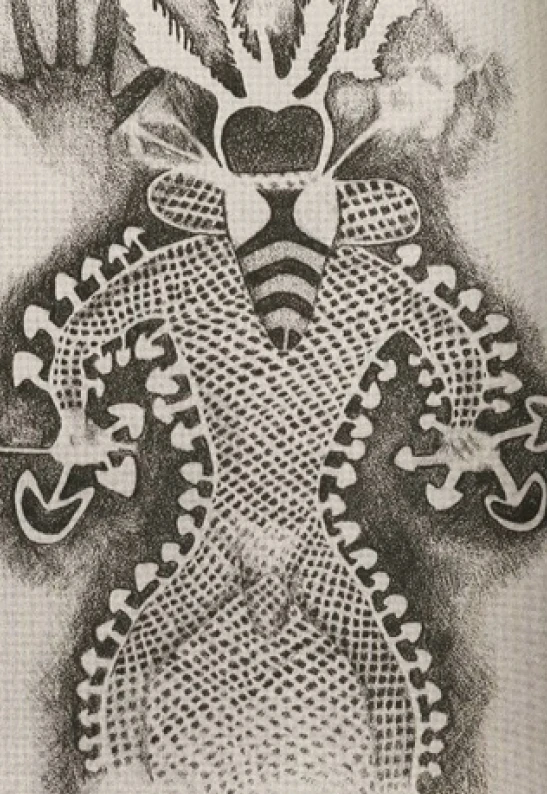
Rock art in present-day Algeria depicting the use of Psilocybe mairei is estimated to be at least 9,000 years old. Similar cave art in Spain suggests humans in this region used psilocybin at least 6,000 years ago.
We can find more recent evidence for the ritual and religious use of psilocybin mushrooms in Central America and Mexico. Mayan statues known as “mushroom stones” are linked to the ritual use of psilocybin as far back as 1000 BCE.
Traditional medicinal and religious use of these mushrooms, which were referred to as "Teonanácatl" (“Flesh of the Gods”) by the Aztecs, continued into more recent times. Spanish missionaries describe the ceremonial use of cacao, followed by elixirs made of mushrooms and honey.
While Spanish authorities forbade these practices during the colonial occupation, the knowledge and traditions have been secretly kept alive by small groups, most notably the Mazatec in the state of Oaxaca, Mexico.
The story of how modern awareness of psilocybin mushrooms became widespread revolves around two individuals: Maria Sabina and Gordon Wasson. Wasson worked as a banker in the US and was an amateur mycologist. In 1955, having read tales of the Teonanácatl mushroom, he was determined to track it down.
His investigations led him to the Sierra Mazateca, and eventually to Huautla de Jiménez, where he met a local curandera, Maria Sabina. Sabina worked with Psilocybe mexicana mushrooms to cure illness through a velada healing ceremony.
To get closer to the medicine, Wasson convinced her to let him participate in the velada by pretending to be concerned for his own son’s health.
Wasson would return to study with Sabina a total of eight times. In 1957, he published an account of his experiences and discoveries in Life magazine, which quickly popularized the use of magic mushrooms worldwide. By the 1960s, the Oaxaca region in Mexico was well-known for its mushrooms and the experiences they produced. An increasing number of people, including Timothy Leary, traveled there to experience the mushrooms for themselves.
It is worth noting that Maria Sabina never made any significant financial profit from providing the gift of the mushrooms to Wasson. Today, as an increasing number of people and corporations devise ways to profit from psilocybin and other psychedelics, the idea of sacred reciprocity — that we must give and receive in equal measure to live in balance with nature — has become an important topic of discussion.
If you enjoy the benefits of psilocybin, you might consider contributing to Esperanza Mazateca, a sacred reciprocity project that supports locals in Maria Sabina’s hometown.
The 1960s and 70s were a tumultuous time in United States history. The Vietnam War, civil rights movement, hippie movement, and growing popularity of psychedelic substances all played a role in fueling revolutionary fervor among citizens and the ensuing reactionary backlash by the government.
Psychedelic therapy, mainly using LSD, gained a promising start in the 1950s. Al Hubbard, Albert Hofmann, Humphry Osmond, Aldous Huxley and Bill Wilson were among the psychedelic pioneers during this period. Dr. J.C. Greer writes, “[t]he greater Los Angeles area was the site of over six hundred psychedelic therapy centers by 1960. Much of the interest was driven by psychiatrists and psychologists, who promoted LSD as a miracle drug capable of treating everything from schizophrenia to writer’s block.”
Nevertheless, certain studies in the 1950s and 1960s were considered controversial and unethical. For example, two prominent researchers, Timothy Leary and Richard Alpert (later known as Ram Dass) eventually lost their Harvard professorships over the use of psilocybin with and on undergraduate students. Meanwhile, the CIA made use of LSD in some of its problematic MKUltra mind-control experiments.
Still, by the late 1960s, psychedelic substances had become widely popular, and“[t]here were hundreds of psychedelicist churches active in the late 1960s,” according to Greer. Leary, who after leaving academia encouraged American youth to “Tune In, Turn On, Drop Out,” had become a counterculture icon.
In 1970, sensing a threat to existing power structures, Congress placed most popular psychedelics on the Schedule I (the most restrictive) list of illegal substances as part of the Comprehensive Drug Abuse Prevention and Control Act of 1970.
In 1971, Richard Nixon, seeing the opportunity to weaken his political enemies, namely the political left and African-Americans, officially declared the War on Drugs. He claimed that drug abuse was “public enemy number one.” Greer writes, “So as to halt the unification of black militants and acidheads, the Nixon administration escalated COINTELPRO, a secret government program that blackmailed and even assassinated high profile activists.”
As a result of the War on Drugs, Psilocybe mushrooms became illegal throughout the US. After the adoption of the Convention on Psychotropic Substances by the United Nations in 1971, most (though not all) countries followed suit. Those who advocated for the benefits of psychedelic substances were marginalized and perceived as enemies of the state. Greer states, “Drug-related arrests and convictions exceeded any other type of crime by the 1980s, and the American criminal justice system soon came to depend on the fifty-eight billion dollars generated annually by this domestic ‘war’.”
Consequently, psychedelic research ground to a halt until the late 1990s.
Despite the laws prohibiting their use, cultivation and possession, fungi are intelligent and adapt to even the most difficult circumstances. Just as mycelium forms truffles to store energy when conditions prevent mushrooms from growing, psilocybin found ways to survive and even thrive after it became illegal.
Some countries, including the Netherlands, Costa Rica, and Jamaica decided against prohibition. In nations that banned it, some local communities decided not to enforce the laws (e.g. mushroom smoothies sold at bars in certain parts of Thailand and Cambodia). In some countries in Latin America, such as Mexico, Brazil, and Peru, psychedelic substances are permissible as part of indigenous rituals.
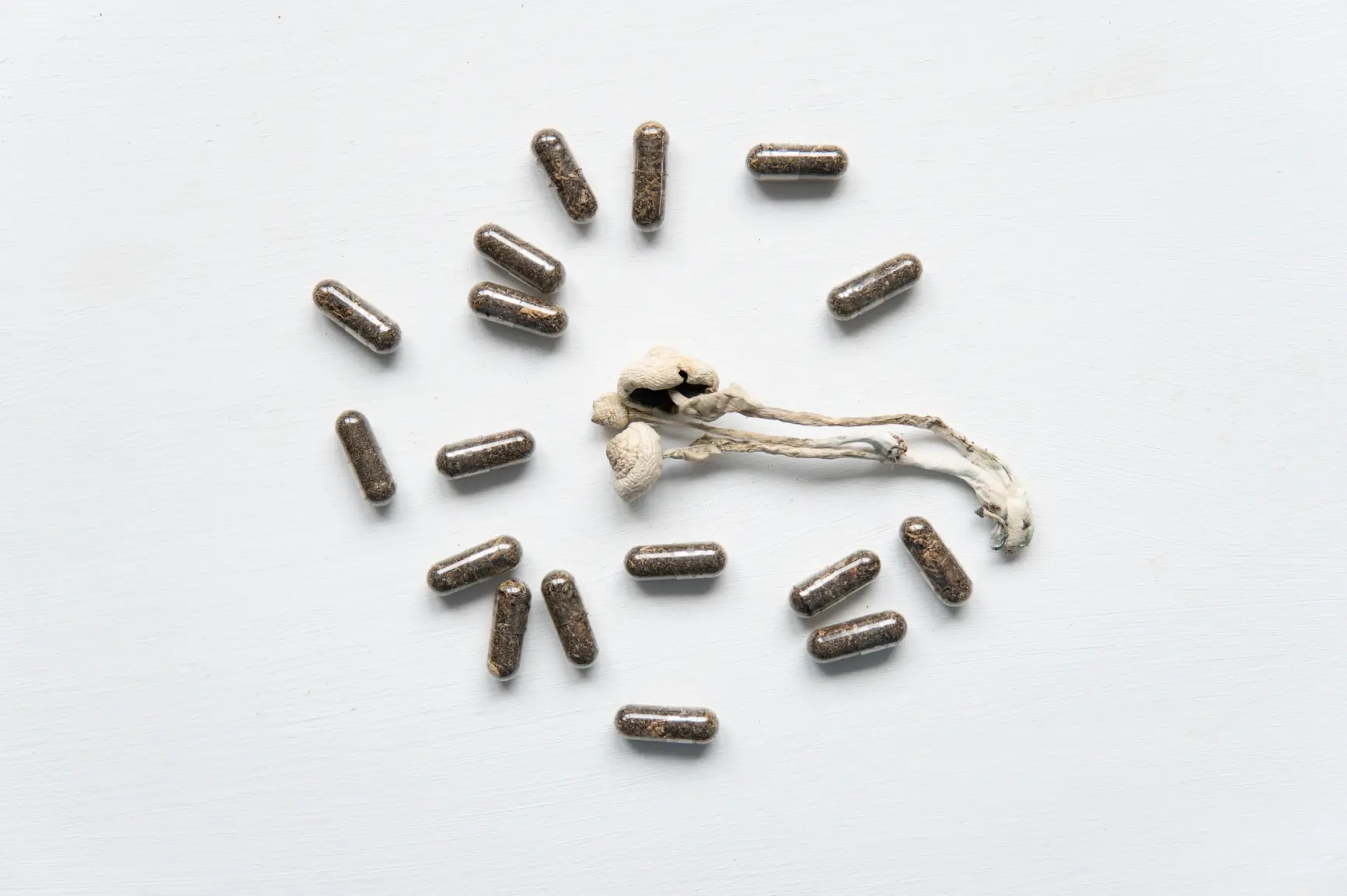
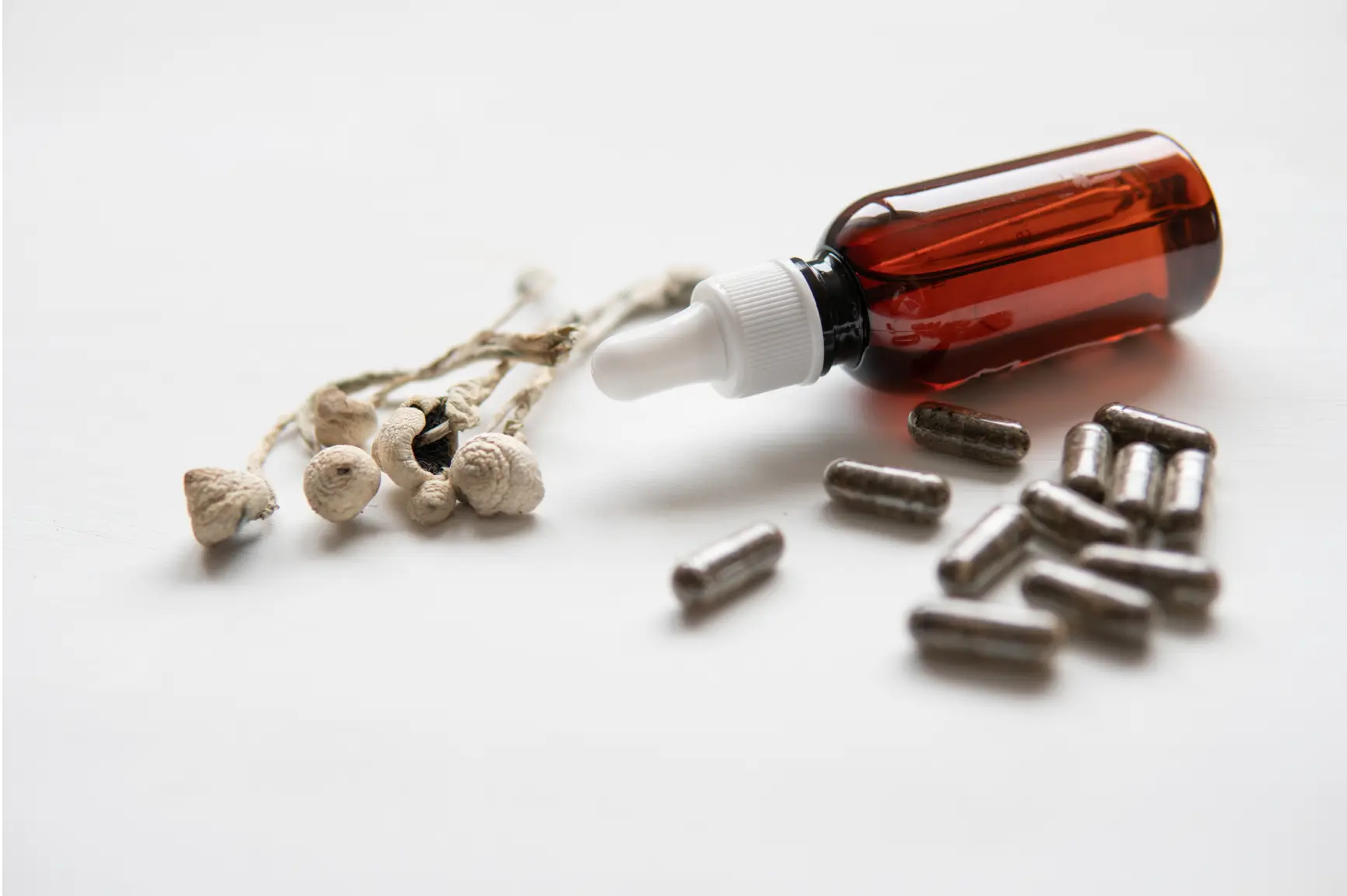
All over the world, networks of mushroom enthusiasts, underground therapists, and counterculture rebels kept the movement going. With the advent of the Internet, these folks found new ways to connect with each other and bring psychedelics into mainstream consciousness.
Despite the heavy potential legal consequences of using and sharing psilocybin, anecdotal stories of the healing power of mushrooms continued to emerge and spread. By the 2000s, after years of petitioning for governmental approval, scientists were able to resume formal research into psilocybin’s therapeutic benefits. Since then, aided by the liberalization of political attitudes and advancements in brain scanning technology, clinical research on psilocybin has gone from almost nonexistent to attracting significant funding.
