This book is a beginner’s guide to the psilocybin journey. It will help you cultivate the mindset, perspectives, and practices necessary to receive the full benefits of your explorations with psilocybin. This guide addresses some of the most common questions, concerns, and inquiries from beginner psychonauts, and covers topics such as the history of psilocybin, preparation, microdosing, macrodosing, and integration.
The book is divided into sections to help you focus on the parts that are relevant to your journey. Please feel free to skip around, take what is useful, and ignore what is not. The process of healing, growing, and experimenting with an unknown substance can be daunting, but you are not alone on this journey. Although until recently, many people have perceived psilocybin to be a recreational substance, historical accounts indicate that humans have consumed psychedelic fungi for millennia to receive visions, heal diseases, and commune with Spirit.
Over the past few years, psilocybin — the primary psychoactive ingredient in certain psychedelic mushrooms and truffles — has been enjoying a massive resurgence in mainstream awareness as a tool for personal and spiritual growth, and as a therapeutic medicine for common challenges such as depression, anxiety and post-traumatic stress. Specific reasons for the heightened interest in psilocybin include:
In the span of a few years, psilocybin has gone from being known mostly as an underground laughter-inducing drug to being touted as a celebrity-endorsed, science-backed treatment. Given the generally slow progress of most psychological and psychiatric therapies, the growing acceptance of psilocybin indicates a sense of collective urgency to find progressive ways to move forward as individuals and as a society.
Unfortunately, despite increasing enthusiasm for psilocybin, it remains illegal under most jurisdictions. Thankfully, as a growing number of researchers and media outlets continue to publish promising data about the potential of psilocybin, more people are finding the courage to experiment and discuss their experiences.
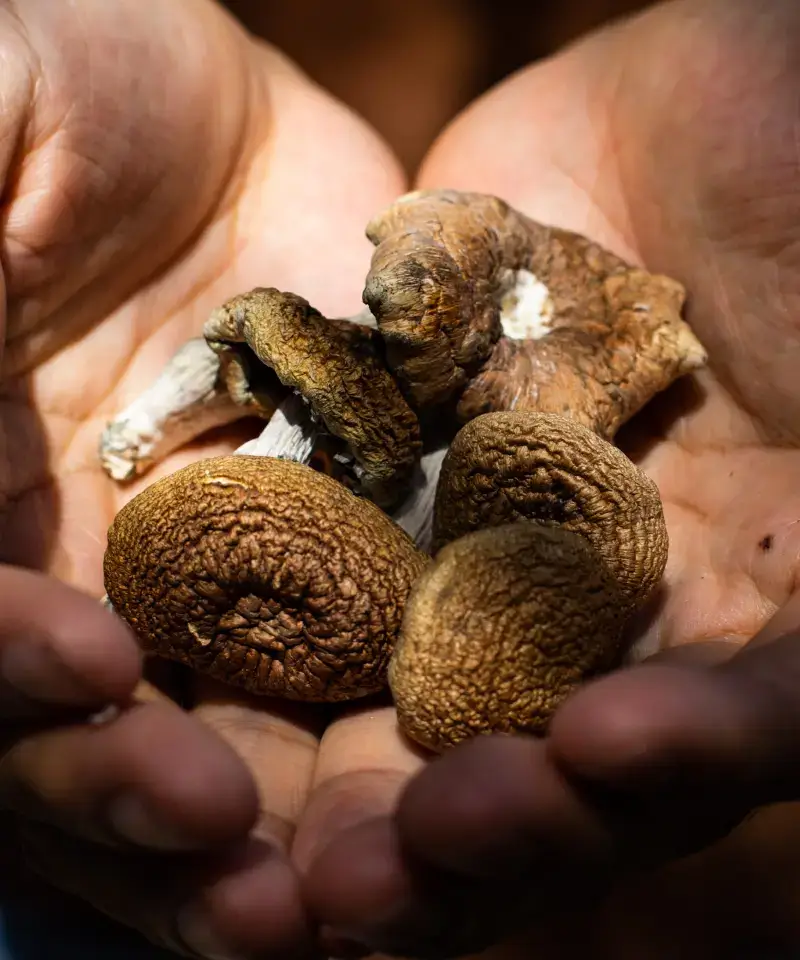
Magic mushrooms flourish on every continent except Antarctica, and they are relatively easy to grow indoors. You can consume them fresh or dried. Nowadays, an increasing number of growers and distributors offer them in gummies, capsules, chocolates, honey, or tinctures. Especially in the US and Canada, mushrooms are becoming increasingly easier to access.
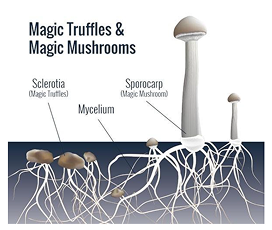
Their underground counterparts, magic truffles, are hardened mycelial masses that form when conditions are not perfect for the mushrooms — the fruiting bodies of the fungi — to grow aboveground. These truffles, also known as sclerotia, contain food and energy reserves that the fungi can use to sprout into mushrooms when aboveground conditions improve. These psychedelic truffles provide an experience almost identical to that of magic mushrooms. They are legal in the Netherlands, and are sold openly there in gift stores and “smart shops.”
Other jurisdictions in which psilocybin enjoys some level of decriminalization or legality include Austria, Canada, Uruguay, Portugal, Spain, the Bahamas, Brazil, Nepal, and Jamaica. In the United States, several cities and states have eased restrictions on psilocybin. You can learn more about the nuances of psilocybin laws here.
Furthermore, due to the recent interest in psilocybin, at least one nonprofit organization and several pharmaceutical companies have discovered methods to produce synthetic psilocybin along with a host of other analogues — substances that mimic the chemical structure of psilocybin and possess similar pharmacological properties as the original compound.
Because the fruiting bodies (mushrooms) are more commonly used than truffles or synthetic psilocybin, this book focuses almost exclusively on mushrooms. However, much of the information is applicable to other forms of psilocybin and other psychedelic substances.
The benefits of working with psilocybin are undeniable. Research from Johns Hopkins University, Imperial College London, NYU, and other universities supports long-established anecdotal evidence that psilocybin can help:

When you work with psilocybin, you may at times feel more present, connected, resilient, grounded, open, optimistic, grateful, healthy, and happy. You may also find that you are able to feel more compassion and love for yourself and others.
You may experience an increase in energy levels and mental clarity. With an expanded sense of empathy and compassion, you may be able to process difficult emotions with more patience and wisdom. Your relationships, habits, memory, and vocabulary may improve. Your nervous system and hormones may feel more balanced. Psilocybin can connect you with your innate embodied intelligence and free you from rigid thought patterns and limiting beliefs.
Simultaneously, you may experience less stress, brain fog, negative self-talk, and physical pain. Judgments about yourself and others may lose some of their power.
How is all this possible from something as innocuous as a fungi?
Mushrooms are highly intelligent. They sprout from a vast underground mycelial network, which has been referred to as the Wood Wide Web as it provides communication and connection between individual beings (e.g. trees) and the entire ecosystem.
Similarly, when ingested, psilocybin mushrooms increase your awareness of the interconnectedness of mind, body, and spirit. You can connect to the oneness of everything: thoughts, emotions and memories; your family, communities, and nature. This awakening or remembering can lead to new insights and a more inclusive worldview.
And, just as mycelium decomposes dead organisms and recycles them into new lifeforms, psilocybin mushrooms break down tensions, traumas, and toxicities in your system, transmuting them into positive emotions and states of mind.
At times, you may experience the mushrooms as teachers, therapists, counselors, advisors, leaders, guides, parents, children, aliens or a host of other energies. The mushrooms can act as a mirror and help you connect with these diverse aspects of yourself.
Before we dive into the rest of the text, here’s a brief note about some of the terminology used in this book.
Medicine, sacrament, psilocybin, magic mushrooms, mushrooms: These words are synonyms and are used interchangeably throughout the text.
Psychedelic and psilocybin: We sometimes use the word ‘psychedelic’ interchangeably with ‘psilocybin’. Although traditionally the word “psychedelic” also refers to other substances such as peyote, ayahuasca, DMT, LSD, and San Pedro, we use it here mainly in reference to psilocybin.
Journey, session, and ceremony: Each of these terms refers to the four to six hours during which one is under the direct influence of psilocybin.
The word journey is also sometimes used to refer to the larger arc of your exploration with psilocybin, which can be weeks, months, or years.
Now, to give you a big-picture overview of the world of magic mushrooms, let’s review the history of psilocybin.